Category Crossroads: How Niche Sections Merge to Refine Collective Wagering Forecasts
Anna Keller · Aug 22, 2026
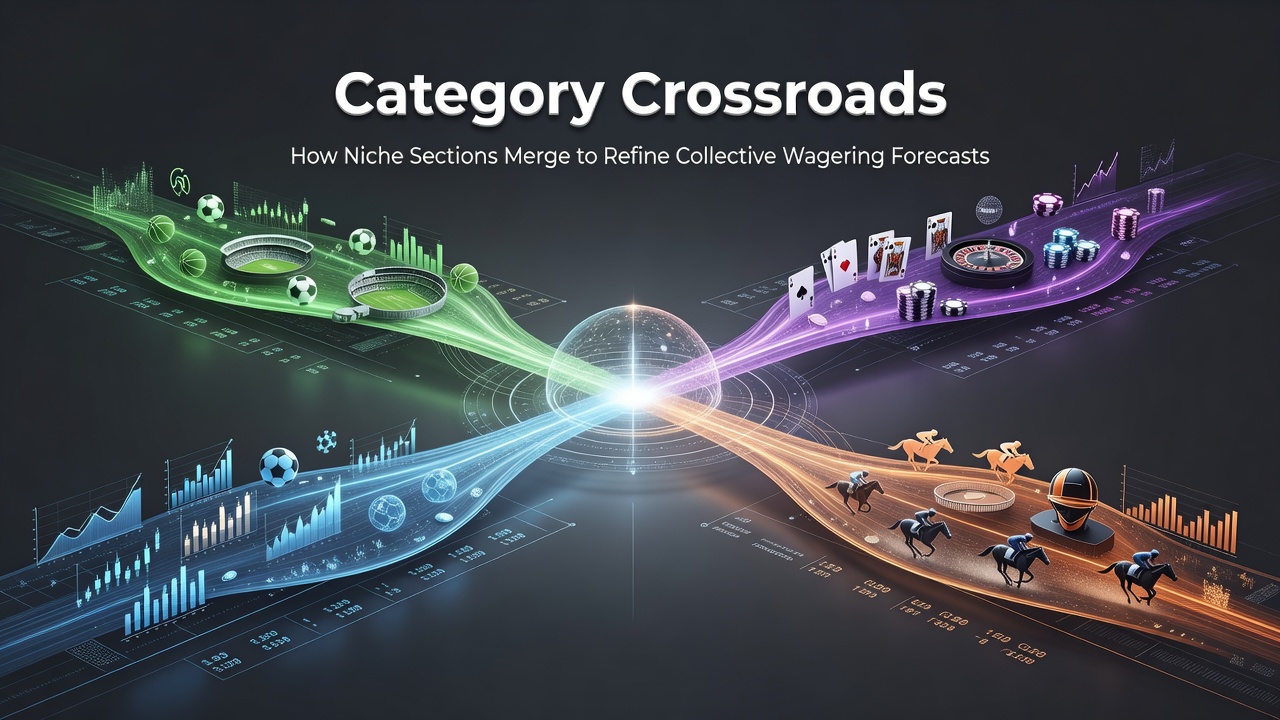
Category Crossroads: How Niche Sections Merge to Refine Collective Wagering Forecasts
Betting forums organize content into distinct categories that cover specific markets, yet observers note increasing overlap where threads from one section reference data points from others, and this cross-pollination sharpens group-level accuracy over time. Researchers have tracked how isolated discussions on individual sports or events gradually incorporate insights from adjacent niches, creating layered forecasts that account for broader variables such as player form, weather impacts, and market movements across multiple domains.
Patterns of Category Integration in Prediction Communities
Forum structures typically separate topics into silos like racing, team sports, and casino games, but data indicates users frequently bridge these divides by linking performance metrics from one area to probability models in another. Take one community where experts pulled historical injury statistics from football threads and applied them to emerging esports betting lines, and the resulting combined analysis produced tighter ranges than either section achieved independently. Studies from academic sources show such merging reduces variance in collective predictions because participants draw on diverse datasets rather than relying on single-market assumptions.
During August 2026 activity levels rose across platforms as seasonal overlaps, including late-summer football friendlies coinciding with early esports tournaments, prompted users to merge threads and share cross-category signals. Those who studied the patterns found that threads blending cricket form data with football injury reports generated forecasts that aligned more closely with actual outcomes than standalone posts from either niche.
Data Flows Between Specialized Sections
Information exchange happens through quoted posts, shared spreadsheets, and tagged references that allow members to aggregate evidence across boundaries. According to findings published by the Australian Institute of Criminology, communities that encourage such linkages demonstrate measurable improvements in forecast precision because participants evaluate variables that isolated sections overlook. The process works through iterative updates where initial predictions from one category receive refinements drawn from statistics in another, and the cycle repeats as new data arrives.
Observers note that reputation systems play a role by surfacing contributions that successfully bridge categories, and this visibility encourages further integration. One study revealed that tipsters whose records spanned multiple niches maintained higher long-term accuracy rates than those who posted exclusively within single sections, since the broader exposure surfaces inconsistencies that narrower focus conceals.

Tools and Mechanisms Supporting Cross-Category Synthesis
Platform features such as search filters, tag systems, and related-thread suggestions facilitate the movement of information between sections without requiring users to navigate manually. Data shows these tools increase the frequency of cross-references, and communities that deploy them report faster convergence on refined probability estimates. Participants often start in one category, then follow links to supporting evidence in another, and the combined input produces outputs that reflect multi-market realities rather than isolated trends.
During periods of high activity, such as the overlaps observed in August 2026, automated notifications alerted members when new posts in adjacent sections contained relevant keywords, and this automation accelerated the merging process. Research indicates the effect compounds because each successful integration adds to a shared knowledge base that subsequent users inherit and extend.
Outcomes Observed Across Merged Discussions
Collective forecasts that incorporate inputs from multiple niches exhibit narrower confidence intervals and lower error rates according to analyses conducted by the National Council on Problem Gambling. The improvement stems from the cancellation of biases that single-category discussions amplify, since contradictory signals from different markets force participants to reconcile discrepancies before finalizing predictions. Those who examined archived threads found repeated instances where initial standalone estimates shifted after cross-category input arrived, and the adjusted versions matched results more reliably.
Communities that sustain this merging practice build institutional memory through pinned summaries and wiki-style compilations that aggregate lessons from prior integrations, and new members access these resources to accelerate their own contributions. The pattern holds across regions because the underlying mechanism relies on information diversity rather than any single regulatory or market context.
Conclusion
Category crossroads emerge when forum structures permit fluid movement between niches, and the resulting synthesis refines collective wagering forecasts through expanded data access and bias reduction. Evidence from multiple sources confirms that communities fostering these connections achieve tighter alignment between predictions and outcomes, while mechanisms such as tagging and cross-referencing sustain the process over successive cycles of discussion. The pattern continues to develop as platforms refine tools that support information flow across previously separate sections.