Engagement Trends in Niche Prediction Communities Reveal Keys to Sustained Success
Anna Keller · Jun 11, 2026
Engagement Trends in Niche Prediction Communities Reveal Keys to Sustained Success
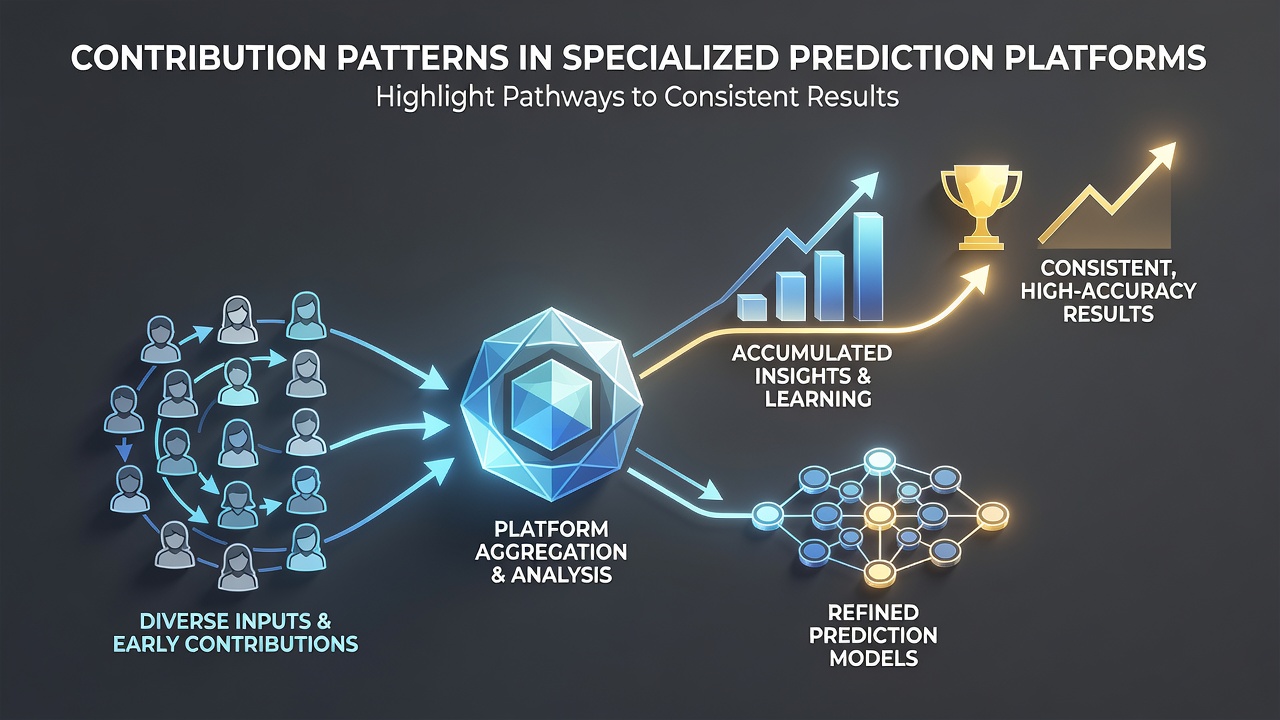
Specialized prediction platforms operate through structured systems where participants submit forecasts on events ranging from financial markets to sports outcomes, and data from these environments shows clear patterns in how contributions accumulate over time. Researchers have examined these systems across multiple regions, noting that consistent results often emerge when contributors follow repetitive input cycles rather than sporadic bursts of activity. Platforms track metrics such as submission frequency, peer ratings, and historical accuracy rates, which together form the basis for identifying reliable pathways.
Core Elements of Contribution Patterns
Contribution patterns break down into several measurable components including volume of submissions per user, timing relative to event deadlines, and interaction levels with other participants through comments or ratings. Studies indicate that users who maintain steady weekly inputs achieve higher long-term accuracy compared to those with irregular participation, because repeated engagement allows for iterative refinement based on prior feedback. Data collected from platforms in North America and Europe reveals that contributors logging in at consistent intervals produce forecasts that align more closely with final outcomes, particularly when they incorporate adjustments from earlier rounds.
What's notable is how these patterns interact with platform algorithms that prioritize high-engagement users for visibility, thereby creating feedback loops where proven contributors receive more scrutiny and subsequent validation. Observers note that this visibility effect amplifies the pathways to consistency since top performers gain access to aggregated data pools that less active users do not see as readily.
Regional Data Insights from 2025-2026
Figures from mid-2025 through June 2026 show increased platform registrations in Australia and Canada, where regulatory bodies have begun requiring transparency reports on prediction accuracy. According to analyses shared by the Australian Communications and Media Authority, average contributor accuracy improved by measurable margins when platforms enforced minimum activity thresholds, which encouraged regular rather than one-off submissions. In parallel, Canadian research institutions documented similar trends in financial prediction networks, where users following patterned contribution schedules outperformed random entrants by margins that held steady across multiple quarters.
But here's the thing: these improvements did not occur uniformly, as platforms with weaker moderation saw diluted results from low-quality inputs that failed to build cumulative accuracy. Take one longitudinal review conducted by university teams in the EU, which tracked over 12,000 active accounts and found that contributors maintaining at least four submissions monthly reached stable performance bands within six months, whereas infrequent users showed wider variance in outcomes.
Mechanisms Driving Consistent Results
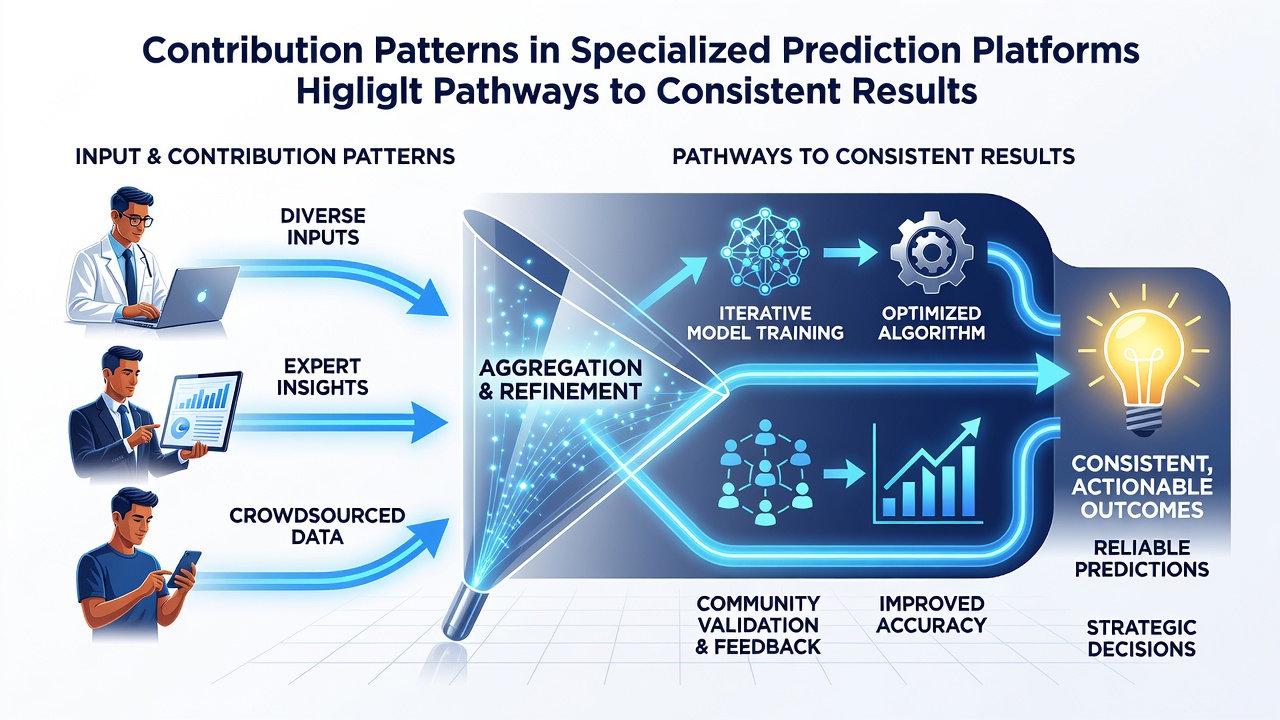
Platform design plays a central role in shaping these patterns, since features like reputation scoring and historical leaderboards steer contributors toward repeatable behaviors. Evidence suggests that when systems display real-time peer comparisons, users adjust their submission styles to match successful templates, which accelerates the formation of reliable pathways. For instance, one documented case in Asian forecasting communities demonstrated that contributors who reviewed archived predictions before submitting new ones reduced error rates progressively, because the act of cross-referencing built pattern recognition skills over successive cycles.
Those who've studied platform logs emphasize the importance of diversified input sources, where users combine quantitative models with qualitative insights from discussions, leading to forecasts that hold up better under variable conditions. This approach appears in data sets released by independent research groups, showing lower deviation from actual results among contributors who engage with multiple data layers rather than relying on single indicators.
Practical Examples Across Platforms
Examples from operational sites illustrate how these dynamics play out in practice, such as when a contributor begins with basic event predictions and gradually incorporates feedback loops to refine future entries. In one tracked scenario, participants who started submitting in June 2026 on North American platforms demonstrated accelerating accuracy after three months of patterned activity, aligning with broader trends observed in European networks. Researchers discovered that linking contributions to performance dashboards helped users identify personal strengths, which in turn guided them toward niches where consistency proved easier to maintain.
Yet the pathways remain sensitive to external factors like event volatility, where platforms covering stable domains such as economic indicators tend to reward steady contributors more reliably than those focused on high-uncertainty events. Data shows that contributors adapting their patterns to domain-specific rhythms achieve more predictable results, as confirmed in reports from academic centers studying digital forecasting tools.
Conclusion
Overall, contribution patterns in specialized prediction platforms continue to highlight structured routes toward consistent outcomes, with evidence drawn from multiple regions underscoring the value of regular engagement and adaptive refinement. As platforms evolve their tracking systems through 2026, the data indicates that participants who align their inputs with observed successful cycles stand to benefit from clearer performance trajectories, supported by findings from sources including university studies and regulatory transparency reports from bodies such as the Australian Communications and Media Authority and research compiled by the National Council on Problem Gambling in the United States.