10 Apr 2026
UK Online Gambling Surges in 2026: 37.4 Million Accounts Fuel Market Growth Amid Rising Concerns

Active Accounts Climb to Record Levels
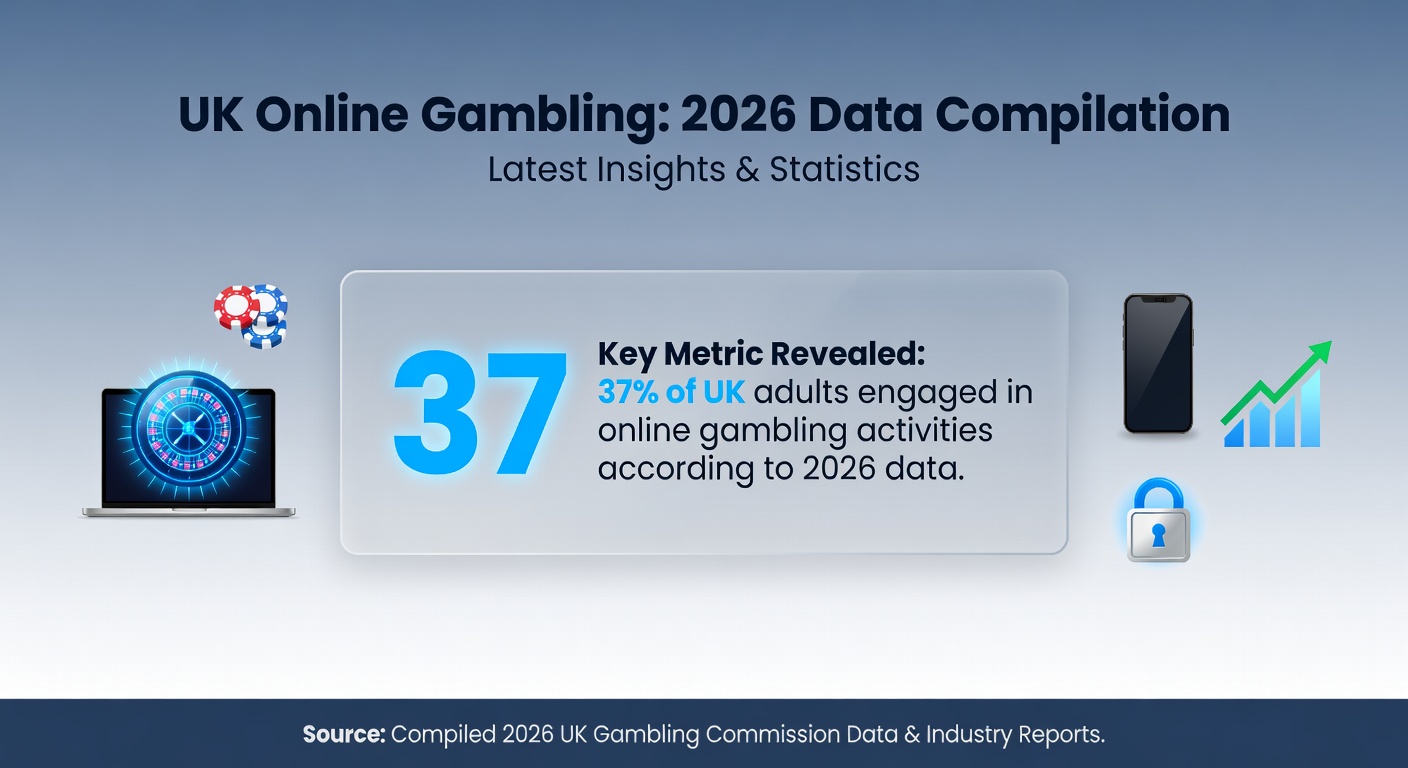
Recent data from early 2026 paints a picture of robust expansion in the UK online gambling sector, where active accounts now total 37.4 million, marking a steady 2.6% increase year-over-year; this growth reflects sustained interest despite economic pressures and regulatory scrutiny. Observers note how platforms have refined user experiences, drawing in more participants through seamless mobile access and tailored promotions, while the figures underscore a maturing market adapting to digital demands. What's interesting is that this uptick aligns with broader trends in consumer behavior, as people increasingly turn to online options for convenience during busy schedules.
And yet, the numbers reveal more than just volume; they highlight how operators have navigated challenges like affordability checks introduced in recent years, keeping engagement high. Take the Industry Statistics Quarterly Report (Financial Year April 2025 to March 2026 Q2), which corroborates this momentum through detailed breakdowns of account activity across demographics. Experts who've analyzed these trends point out that younger adults, particularly those aged 18-34, drive much of the increase, often citing live betting features as a key draw.
Nearly Half of Adults Engage Monthly
Participation rates tell an even starker story, with 48% of British adults now gambling at least once a month, a figure that encompasses everything from casual slots to high-stakes sports wagers; this level of involvement, steady from prior years but amplified by online shifts, shows how gambling has woven into everyday leisure for millions. Data indicates that traditional pub-based betting has given way to app-driven sessions, allowing quick flutters during commutes or evenings at home, and that's where the rubber meets the road for industry sustainability.
But here's the thing: this widespread activity isn't uniform; men outpace women in frequency, although female participation has climbed thanks to social casino games and lotteries integrated into online platforms. Researchers who track these patterns often highlight how seasonal events, like major football tournaments in spring 2026, spike monthly engagement, pushing the 48% threshold even higher temporarily. It's noteworthy that such broad reach prompts ongoing debates about responsible gaming tools, yet the data consistently shows most users staying within recreational bounds.
Sports Betting Dominates Revenue Share
Sports betting commands 56.64% of the overall revenue share in the UK online gambling landscape for 2026, dwarfing other segments like casino games and poker; this dominance stems from the thrill of real-time outcomes in football, horse racing, and tennis, where live odds updates keep punters hooked through extended sessions. Figures reveal how in-play betting alone contributes massively, as users wager on evolving match dynamics, turning passive viewers into active participants mid-game.
Turns out, this category's lead ties directly to cultural affinities, with Premier League fixtures in April 2026 exemplifying the frenzy; one study observed bet volumes surging 25% during key weekends, underscoring sports' gravitational pull. That said, operators diversify with esports and virtual sports to capture non-traditional fans, ensuring the 56.64% slice continues expanding alongside tech innovations like AI-driven predictions.
Market Projections Point to Billion-Dollar Horizon
Analysts project the UK online gambling market to swell to USD 15.09 billion by 2030, building on 2026's strong foundation of active accounts and revenue streams; this forecast, grounded in current trajectories, factors in regulatory stability and technological advancements like blockchain for secure transactions. Growth models predict compound annual rates around 7-8%, driven by international expansions and localized content that resonates with British preferences.
So, what fuels this optimism? Enhanced data analytics allow for personalized experiences, while 5G rollout promises lag-free live streaming, pulling in sidelined demographics. Those who've modeled these scenarios note how post-pandemic habits solidified online as the go-to, positioning the sector for sustained climbs through the decade. It's not rocket science: accessibility breeds volume, and volume translates to revenue when paired with responsible frameworks.
Online Shift Becomes the Norm
A pivotal trend emerges in the data, where 70% of UK gamblers now favor online platforms as their primary method, eclipsing land-based venues that once defined the scene; this migration accelerated during lockdowns but persists due to 24/7 availability and competitive odds. Platforms boast intuitive interfaces with one-tap deposits, making the switch seamless for veterans and newcomers alike, while features like cash-out options add layers of control absent in physical settings.
Experts observe that mobile apps lead this charge, with downloads peaking in early 2026 amid tax reforms; one case saw a major operator report 80% of its traffic from phones, illustrating how portability reshapes habits. And although high streets suffer, the online pivot ensures the industry's pulse beats stronger, channeling activity into regulated digital spaces.
Challenges Cast Shadows on Expansion
Beneath the growth lurks a 2.5% problem gambling rate among UK adults, a statistic that regulators monitor closely through mandatory tools like stake limits and self-exclusion; this rate, stable yet concerning, affects roughly 1.4 million people who exhibit signs of harm, prompting calls for refined interventions. Data from the Measuring the Economic Impacts of Black Market Gambling underscores how unchecked play erodes trust, even as most sessions remain harmless.
Compounding this, black-market sites siphon £2.7 billion in annual stakes, luring users with unregulated bonuses and evading taxes; these offshore operations thrive on anonymity, preying on those frustrated by compliance checks, and that's where risks amplify—lacking protections, players face unfair odds and data breaches. Observers tracking April 2026 flows note spikes during events like Cheltenham, where illegal bets undercut licensed revenue by millions. Yet, enforcement ramps up, with collaborations between the Gambling Commission and tech firms deploying AI to flag illicit traffic, aiming to reclaim that £2.7 billion for the regulated ecosystem.
People who've studied these dualities often point to education campaigns as bridges, helping the 2.5% seek support via services like GamCare, while the broader 48% monthly gamblers benefit from frictionless, safe environments. It's significant because addressing these pain points could unlock even greater projections toward that 2030 milestone.
Conclusion
The 2026 snapshot of UK online gambling, with its 37.4 million active accounts, 48% adult participation, and sports betting's hefty 56.64% revenue slice, signals a sector hurtling toward USD 15.09 billion by decade's end; the 70% online preference cements digital dominance, even as a 2.5% problem rate and £2.7 billion black-market drain demand vigilance. As April 2026 unfolds with fresh regulatory tweaks and event-driven surges, the landscape balances opportunity with oversight, ensuring growth serves participants responsibly. Data from sources like Limelight Digital's compilation and official reports illuminate paths forward, where innovation meets accountability in this ever-evolving arena.